Showing posts with label Peugeot. Show all posts

Sunday, September 19, 2010

Peugeot RCZ 200 THP review

Peugeot RCZ 200 THP
Peugeot RCZ 200 THP

What is it?
It’s the flagship 197bhp Peugeot RCZ, now on sale in the UK costing a not inconsiderable £25,050. It’s a very handsome thing on the road, even if the front end does have rather a lot in common with the standard 308 CC.

Technical highlights?
The engine is the obvious one here, so for a change I’d like to talk about the gearbox. Instead of the ponderous, sloppy shift and long, long gearing of the RCZ 156 we drove recently, the 200 has a newly developed six-speed manual gearbox, and it’s really rather good. Nice crisp, short throw lever and well judged gearing.

What’s it like to drive?
The damping is particularly impressive – it’s a much tauter car than you might expect, yet still manages to round off bumps rather nicely. The chassis is stiff, the wide track helps minimise bodyroll and around corners its incisive enough to be entertaining. If the roads are wet then understeer will build and it’s here you’ll discover that the RCZ’s tail doesn’t really want to get involved in the cornering process. Even with the traction control turned off (incidentally, it can be fully disabled) the RCZ is a more inert than we’d hoped.


But it is very quick and composed across the ground and although the steering isn’t as sharp as the suspension, neither is it hopelessly disconnected. In fact the whole car feels pretty together.

How does it compare?
The Audi TT is the obvious rival here, and the RCZ runs into a few difficulties. It’s not that it’s slower or worse to drive than the £26,475 Audi, because the French coupe is competitive in both areas. But the interior ergonomics let it down. The seats are flat, unsupportive and too high, the switchgear on the centre console can’t be reached unless you lean forward and the build quality isn’t quite there.

I’d also like to throw another rival into the mix – the Renaultsport Megane 250. No, not quite as dramatic to look at, but cheaper (£24,160), faster, and better to drive.

Anything else I need to know?
It’s not a hatchback, so practicality is limited. On the plus side the boot is big – far more generously proportioned than the rear seats, in fact.
Peugeot RCZ 200 THP
Peugeot RCZ 200 THP

Peugeot RCZ 200 THP
Peugeot RCZ 200 THP

Online Car Buying Tip :
First and foremost, you need to examine your budget & have your own credit history ready.
Know your automobile needs are :haul heavy equipment? a sizeable family or head up a carpool? travel far or use the car rarely?
Then go to the manufacturers' Web sites to check out the cars and the available options.
Make sure you go to more than one pricing site to get the best idea of the average price (know the difference between MSRP & Sticker).
If you plan to trade in a car you already own, you want to know the price of your trade-in.
Read More car reviews in magazines and online helps on top of opinion from friends & relatives on the car.
Review Source

Monday, February 1, 2010

Peugeot SR1 Concept Wall Paper

Peugeot SR1 Concept

Peugeot SR1 Concept

Peugeot SR1 Concept

Peugeot SR1 Concept

Peugeot SR1 Concept

Peugeot SR1 Concept


Peugeot combines emotion with the pursuit of perfection

Through the Peugeot SR1, the Marque reveals the stylistic design trends for its future models. The concept car embodies the new world of Peugeot, reflected by the new Lion badge which adorns its body.

Dynamic, balanced, sensual, with an exclusive high-tech interior, this "dream car" explores and reinterprets the theme of the "Grand Touring Car".

The use of HYbrid4 technology allows the Peugeot SR1 to offer an engineering specification in keeping with its styling: 230 kW (313 bhp) with emissions of only 119 g/km of CO2 (0 in electric mode), 4 wheel drive and steering.... for an ideal blend of excitement and efficiency.

Styling that predicts the future

Elegance, purity, dynamism, allure, controlled power... these ideas find their fullest expression with the Peugeot SR1, the dream car par excellence. More than ever, the aesthetic traits of this concept show the general design trends of the Marque's future products, renewing Peugeot's strong stylistic identity.

In short, this concept car creates a new design language.

The Peugeot SR1 is a vehicle with timeless, ideal proportions, revisiting the great traditions of grand touring cars of the past: a large bonnet, flowing wings and a very low centre of gravity.

The design of the body gives the car a new balance: a sculpted bonnet, sweeping sides and a chiselled rear design. At the side the styling lines merge into the side windows and the front windscreen, emphasising the design of the bonnet.

This overall effect blends easily with the design detailing: the design of the lights and the air intakes, the shape of the door mirrors. these elements merge seamlessly with the vehicle's carbon "skin". In parallel, some features ("full LED" internal headlamp functions, radiator grille contour); stand out, as if suspended. The hard top echoes the feel of this intense, high-tech assembly: It uses preformed profile technology derived from the world of sailing. It blends with the body, creating the illusion of a Coupé. The SR1, however, radiates the same visual strength, with or without the hard top. Finally, the SR1 displays the new Peugeot Lion badge. Redesigned, finely worked and sculpted, it mirrors perfectly the perception of the vehicle as a whole.

Overall the Peugeot SR1 concept car gives the impression it has been carved from a solid block of material, monolithic, protective, sculptural and dynamic. At every moment it makes a great play on contrasts: purity and technological sophistication, authenticity and advanced technologies, expressiveness and understatement. making it a car that is quite simply desirable!

A modern and exclusive "2+1" interior

The interior, too, promotes the idea of contrast. While the driver's seat and all controls are dedicated to out-and-out enjoyment for the driver, the passenger compartment is designed to provide optimum versatility and new sensations for all its occupants.

There is room in the vehicle for three people as the third rear seat nestles in the middle, behind the two front seats. Entry to this seat is facilitated by the centre console, which can slide forward to improve access.

The interior ambience blends colours and materials, with strong references to "a past motoring era" combined with "the latest advanced technology". Inside the vehicle, patinated leather and different grained wood are examples of the use of authentic and natural materials, warm, sensual and charged with history, that blend seamlessly with, "high tech" materials such as nickel and satin-finished chrome.

The construction of the fascia panel, optimised to perfection, gives a visual prominence to certain mechanical components such as the steering column and a number of peripheral controls. Similarly, the instrumentation combines analogue and digital read-outs, giving clear emphasis to every item of information conveyed to the driver. This is the case for instantaneous fuel consumption and vehicle range, displayed on two glass crystal gauges directly in front of the driver.

Another technological innovation is the creation of an exclusive wristwatch, designed in partnership with Bell&Ross®. This timepiece, with milled inserts of solid aluminium, slots perfectly into a dedicated housing on the fascia panel.

Every component and every detail has, therefore, benefited from meticulous attention, both in terms of design and manufacture, to guarantee perfection and an unrivalled refinement of perceived quality.

Technologies at the service of movement

The SR1 concept also blends styles in terms of its technical characteristics. For example, it incorporates HYbrid4 technology, which will be launched in the Peugeot 3008 in 2011. In the SR1, at the front, a 1.6 litre THP petrol engine with a power of 160 kW (218 bhp), is combined with a rear electric motor developing 70 kW (95 bhp). In electric only mode, the car becomes a ZEV (Zero Emission Vehicle), while its combined cycle fuel consumption is only 4.9 litres/100 km or 119 g/km of CO2.

When the two power trains operate simultaneously, the SR1 develops a potential maximum power of 230 kW (313 bhp) and also benefits from 4-wheel drive.

Using HYbrid4 technology, which will eventually become available on different models in the Peugeot range, the SR1 concept offers convincing proof that driving pleasure can be combined with environmental friendliness.

Exploiting the best of existing technology to offer road holding worthy of this exceptional concept, the suspension consists of double wishbones with drop links both at the front and the rear. For even greater driving precision, the SR1 benefits from the adoption of 4-wheel steering. The turning angle of the rear wheels is controlled as a function of the vehicle speed, via motorised links on the rear wishbones, giving the vehicle superb agility under all circumstances.

The Peugeot SR1 concept car will be unveiled to the general public at the next Geneva Motor Show, in March.

Source : Peugeot Press Release


Wednesday, January 27, 2010

Peugeot 408 Debuts In China

Peugeot 408

No,it is not the successor to the sleek 407 sedan (thank god). It is actually a 308 with a tail according to Peugeot. The rear is a let down in comparison to other models in the peugeot range. Here is the story from Paultan :

The new Peugeot 408 is actually a C-segment notchback sedan based on the C-segment Peugeot 308 platform, but with its wheelbase lengthened to give better interior room since it is a 4-door. Suspension settings have also been revised for the car’s new sedan weight and for a more comfort-biased setup. In China, its positioned against other C-segment sedans like the Civic and the Focus. And this time Peugeot seems to have gotten the ‘hatch to sedan’ conversion right – it looks a lot less awkward than the 206 Sedan.
Peugeot 408
The 408 measures 4,680mm long, 1,800mm long and 1,500mm wide. It has a wheelbase of 2,710mm which trumps the Civic’s throne as the longest wheelbase C-segment vehicle available right now (well not exactly – the Fluence wheelbase is said to be 2,702mm). It approaches CD-segment territory with that wheelbase length (the Pug 407’s wheelbase is 2,725mm)! This should mean pretty good interior room in theory.
Peugeot 408
The Chinese launch of the car introduces a two engine line-up – a 110hp 1.6 liter engine and a 147hp 2.0 liter engine. Different markets may get different engines. The 1.6 liter engine’s 110 horses is reached at 5,750rpm while peak torque of 147Nm is reached at 4,000rpm with 85% reached from just 2,000rpm. and 95% (140Nm) between 3,000rpm and 5,500rpm. That’s a good and wide torque spread. The 2.0 liter unit is equipped with continuously variable valve timing. It produces its peak power at 6,000rpm with peak torque of 200Nm reached at 4,000rpm.
Peugeot 408
The transmission options are either a 5-speed manual or a 4-speed automatic, which is the new AT8 Porsche Tiptronic system model. Not the same one as found in the 206 or the 308, which is the AL4. The AT8 uses a torque converter by ZF which improves gearbox output and reduces consumption by about 5%. The gearbox management can also lock the three higher gears to reduce torque converter slip during gentle driving.
Peugeot 408


Sunday, January 10, 2010

2010 Peugeot Bipper Tepee

Friday, November 13, 2009

Peugeot Hybrid3 Evolution

Peugeot Hybrid3 Evolution
The Peugeot Hybrid3 Evolution can be describe as a hybrid from many perspective. First it is a scooter with three wheels which gives this Peugeot some Car like characteristics. The other factor would be the power train is made up of a gasoline engine and electric motor.

The Hybrid3 Evolution was made public during the Milan International Cycle and Motorbike Show which ends on the 15th of Nov 09.
The HYbrid3 Evolution is equipped with a 41HP 0.3-liter petrol engine driving the rear wheel, and two 3kW electric motors, one in each front wheel, delivering a combined output of 8HP.

The electric motors are powered by lithium-ion batteries which can be recharged by an energy recovery system active during deceleration and braking. There are no mechanical connections between the front and the rear motors, as everything is controlled electronically by-wire.

Peugeot Hybrid3 Evolution
Similar to many hybrid cars out there, the HYbrid3 Evolution can be driven in a number of different ways, including in all electric mode for a range of up to 10 km (6 miles), petrol only mode and a combination of both petrol and electric motors. According to the Peugeot, the hybrid scooter returns an average fuel consumption of 2.0lt/100 km (117.6 mpg US) with C02 emissions of 48 g/km.

Peugeot did not mention if it has any plans to introduce a production version of the HYbrid Evolution which is a shame as I have already imagine how this scooter can be modified to be the best looking beach buggy.

Peugeot Hybrid3 Evolution

Source : Carscoop


Share

Saturday, October 10, 2009

Industry News


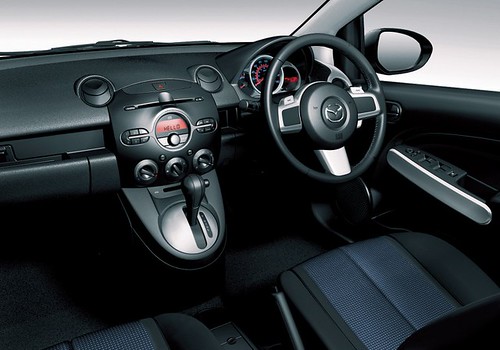
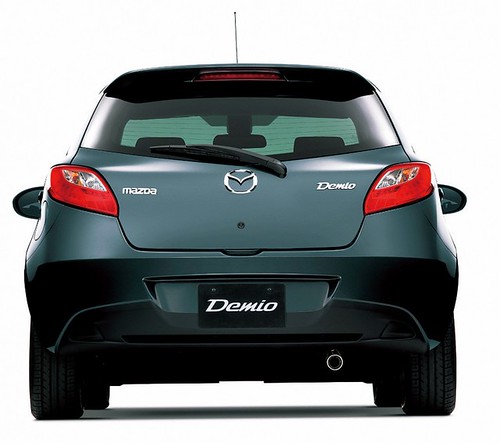
Mazda Japan announced that the Mazda 2 also known as Mazda Demio will be built at a new passenger car plant known as AutoAlliance Thailand Co Ltd. This company is a result of a joint venture manufacturing facility with Ford Motor Company. Location of the plant is no other than in Rayong Industrial Estate also known as the Detroit of South East Asia. The locally assembled Mazda 2 will be marketed in the ASEAN region with sales targeted to be around 20,000 units per year.


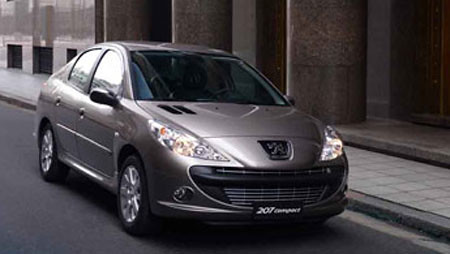
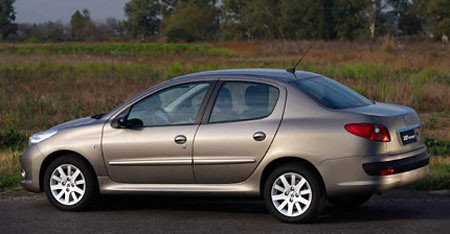
While The Japanese are busy with their Thai counter part, French automaker Peugeot has signed an agreement with Naza to assemble the 207 sedan in Malaysia . Naza is the current franchise holder for Peugeot in Malaysia under its company Nasim Sdn Bhd with their assembling facility located in Gurun Kedah. Local assembly will commence around 2010 October and the Gurun plant will be the only right hand drive 207 Sedan assembler in the world. A production of 18,000 units a year is planned. The 207 Sedan is essentially an updated 206 Sedan based on the 206 chassis with a 1.6 liter engine sitting under the hood.


Source


Share/Save/Bookmark